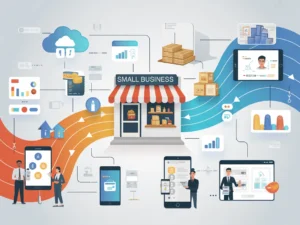
Technology is a constantly evolving resource for both consumers and organizations. Sometimes it appears like new technology is released, but before you have time to learn how to utilize it, a more advanced product replaces it.
Contents display
Adopting technology can significantly improve your business processes, even though its speed may initially seem overwhelming. New technologies make it easier to evaluate data, engage with clients, and keep corporate information safe and secure. To keep your company using the newest tools, you can simply upgrade existing programs and products.
On the other hand, not adopting technology leaves your organization at danger of being outdated, losing out on streamlined systems or processes, or being susceptible to security attacks. Your client or customer experience may deteriorate, making it less likely that they will come back to your establishment.
Find out more about how technology may benefit your company, the dangers of ignoring it, and how to select the best tools for your company.
Find out more about how technology may benefit your company, the dangers of ignoring it, and how to select the best tools for your company.
Improves Data Management
Do you gather information for your company? You can collect data on nearly everything with the help of modern tools, from sales per client to the quantity of clicks on a website link. You may evaluate this data and turn it into useful insights to enhance your messaging, productivity, and profitability.
On the other hand, collecting and analyzing your data using antiquated methods or instruments may render it useless. You must begin with effective data management if you want to maximize the benefits of data acquisition. Technology makes it possible for your company to collect, store, and analyze data more effectively. Better decisions are the result of better data.
Technology for data management aids:
- Minimize Duplicate Data: By combining already-existing duplicates, management technology removes duplicate data at collection sites.
Accelerate Procedures: Your team can locate and analyze data more quickly thanks to modern technology, which frequently results in quicker reaction times. - Organize Information: Adopting data management technologies and practices keeps information organized as it passes through the data lifecycle
- Enhance Accessibility: Team members have the information they require to finish tasks, develop insights, and take action.
Boosts Productivity

Compared to major enterprises, many small businesses have fewer resources. Because of this, it is crucial for small enterprises to minimize waste and efficiently manage resources, notably labor and time. Employees can do more tasks and be more productive when they spend less time on manual procedures. Technology can be used to automate procedures and boost productivity throughout your company.
For small businesses, increased efficiency frequently results in immediate benefits. A highly productive company spends less time on laborious jobs and manual procedures. You can create action plans, improve marketing messaging, and make future preparations with this extra time.
Before introducing invoicing technology, let’s take a look at a sales team:
- The sales crew inserts sales data from paper invoices into a database.
- Each team member needs a few minutes to finish this process.
- They must frequently verify the database’s accuracy due to human mistake, such as typos.
- Members of the team spend a lot of time manually entering data and reviewing their work
However, following the implementation of automatic invoicing software:
- Sales data instantly populate in the database.
- There is a significant decrease in human error.
- The sales crew no longer has to waste time entering data by hand.
- The group may use their time to concentrate on what they do best, which is increase sales for the company.
Promotes Interaction
A cohesive team is more productive and successful. Every team member may observe the current state of a project, who is in control, and what comes next thanks to open communication. This reduces workflow delays and fosters greater accountability among team members. Projects are less likely to slip through the gaps or be unintentionally abandoned when your staff collaborates to complete tasks.
You have practically limitless communication alternatives thanks to modern technology platforms. They let you go from depending on emails or phone calls for communication to actively connecting with your teams. Project management software, for example, makes it easier to keep the complete team updated on where a project currently stands.
Reduces Labor Expenses
It might be difficult for small firms to find the best candidates for a position. All too frequently, small businesses lack the funding necessary to provide compensation packages that attract top people. By using technology to automate company operations, you may save labor expenses and free up more people for more specialized roles.
Process automation reduces the necessity for non-specialized jobs. By eliminating these jobs, you can lower labor costs and save money for your company. The cost savings can then be reinvested in your company.
This can imply hiring for a specialist position with a dedicated skill set using a more sophisticated remuneration plan. Similarly, you may decide to fund your current staff members’ schooling so they can assume greater positions and responsibilities inside the company.
Protects Business Information
Every company that stores data understands the value of data security. Your customers, staff, and suppliers rely on you to protect their data from both physical and online theft. Your data may be vulnerable to assault due to outdated data storage.
Investing in cutting-edge data technology protects your data against attacks. For instance, on-premise data storage is typically less secure than cloud computing. With features like two-factor authentication, the majority of modern technology, including software as a service (SaaS) platforms, enhances security. Many cloud-based solutions even have security teams who are tasked with finding vulnerabilities in their systems and patching them before external adversaries can find them.
Minimizes Downtime
One of the biggest risks to your company’s productivity is downtime. When processes, tools, or systems are malfunctioning, workers are unable to finish projects efficiently. They are left with little to do but wait for systems to become operational once more. Your company is left with reduced output and wasted labor resources.
Technology can help you minimize downtime in your business operations. Your programs and systems are nearly always available thanks to automated procedures, quicker reaction times, and automatic updates. By embracing new technology, you reduce the likelihood that an antiquated system that is unable to meet your present business requirements will crash.
Think about a customer relationship management (CRM) system that runs on the cloud. Your company uses email and spreadsheets to handle customer data before implementing a contemporary CRM system. A team member enters customer information, then sends the file to a team member at a different office by email. Before making any modifications, the second team member must wait for the file to download.
After downloading, they discover that the file was created using an earlier version of the program, so they have to update it. The employee cannot proceed with the project until it is finished, and this procedure takes even longer.
Moving to a cloud-based CRM software might streamline the data-sharing procedure if this describes how your company operates. All of the data and information is standardized and stored on the platform. The file does not need to be converted to a compatible format or sent via email. There is virtually no downtime between the first employee finishing their work and the second person starting theirs.
Enhances the Client Experience
The customer experience is the culmination of every interaction a customer has with your organization. More devoted, recurring customers result from an interesting and satisfying experience. You must provide customers with an unparalleled experience at every stage of their interaction with your company in order to win their loyalty. This might include advertising with a perfectly targeted message, speedy responses to questions, or an improved transaction experience.
This is a problem for a lot of small firms. Big businesses could be able to keep employees on hand 24/7 to respond to inquiries. Additionally, they may have access to groups of analysts who can create specialized marketing collateral and comprehensive strategies to enhance the buying experience. These tools are unlikely to be reasonably accessible to a small business.
The good news is that technology helps your small business compete with larger companies and enhance the customer experience. Automated chatbots and AI customer service, for example, allow you to answer questions or fix problems at any time. In order to craft marketing messages that are specifically customized to your audience, customer management solutions assist you in identifying what matters most to them. You can find areas of weakness in the client experience by analyzing your business reviews with the aid of review management software.
There are practically many methods to improve your company’s customer experiences thanks to technology. Customers’ perceptions of your company generally increase when they have more pleasant experiences. This fosters a solid rapport with devoted clients who provide the groundwork for future business expansion.
What Takes Place If Your Company Doesn’t Use Technology?
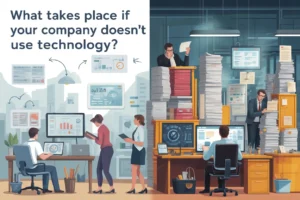
There are several advantages to integrating technology into your company. Your firm will function more smoothly and effectively if you use the appropriate technology.
But there are other reasons to use technology in your company besides its advantages. Your company may suffer if you don’t use technology. You run the danger of impeding your company’s progress if you disregard technology and stick with antiquated procedures.
If your company doesn’t adjust to technological advancements, you may encounter obstacles like:
Less Effective Procedures: Technology frequently expedites corporate procedures to make a company more effective. You won’t be as productive as you are today, though, if you keep using your current procedures. Over time, your organization will often become less productive if you continue to use old technology or manual processes.For instance, you recruit a new worker to replace a departing employee. The former worker had to finish a number of chores by hand, but they failed to provide thorough instructions. After then, your new hire must learn and build these procedures on their own, which is less effective than the prior procedure. The possibility of missing instructions during transitions is eliminated via automation.
- Falling Behind Rivals: If your rivals adopt and maximize the newest technology, you risk being left behind. You have to play catch-up as your rivals gain ground. Your chances of staying competitive or outperforming them increase with the speed at which you adopt new technologies. Instead of striving to keep up, this puts you in a position to lead your industry.
- Bad Customer Experiences: Generally speaking, when customer effort increases, brand loyalty declines. What does this signify? Customers are less likely to return if it is difficult for them to get in touch with you, use your product or service, or locate your organization. It is more difficult to identify flaws and improve your consumer experience when you ignore technology. However, embracing technology provides you with the means to cultivate a devoted clientele.
- Risk Irrelevance: Do you recall Blockbuster, the massive video retailer? They used to be a leader in the entertainment sector, but now they’re irrelevant. Blockbuster chose to stick with their current business strategy of renting movies from physical stores despite having the opportunity to embrace technology and become a pioneer in the streaming entertainment industry. These days, relatively few individuals prefer using streaming services for entertainment over going to a video store. Blockbuster is a prime illustration of how crucial it is to embrace technology in your company or risk being obsolete.
- Overlooked Data Insights: Are you aware of the most effective ways to connect with your clients or customers? Can you identify the parts of your company that produce the greatest waste? Data technology makes it simple to provide answers to these queries. If you don’t use the technology, you can be losing out on these insights and more. Investing in technological tools and solutions will help you extract more useful information from your data.
Selecting the Appropriate Technology for Your Company
Your business requires technology, but you also need to find the proper solution. Time and money can be wasted by merely purchasing technology tools without considering your needs. When determining which products or services are best for your company, respond to these questions:
- Which aspects of technology—data management, security, efficiency, etc.—do you wish to enhance?
- How much do you spend on technology?
- Are the other members of your company’s executive and leadership team on board? Does this influence the products you can select?
- Do you need a new solution, or can you optimize the ones you already have?
- Are there resources available for staff training on the new system in the solution you’re thinking about? Is it simple to use?
Investing in technology helps you stay ahead of the competition and stay relevant. What do you think is the most significant impact technology has on your business? Let us know in a comment. Finding the right technology solution for your company can significantly increase the effectiveness of your business processes.
You’ll see increased efficiency and better client and customer experiences while also securing and organizing data.